
Inhibition of Angiogenesis
Inhibition of Angiogenesis
Angiogenesis refers to the formation of new blood vessels from existing ones. This process plays a vital role in wound healing and tissue regeneration. However, angiogenesis also plays a key role in the growth and spread of cancer cells. To sustain their rapid growth, cancer cells stimulate the formation of new blood vessels in order to secure a supply of oxygen and nutrients.
By inhibiting angiogenesis, it becomes possible to block the formation of new blood vessels, thereby starving cancer cells and suppressing their growth. Furthermore, studies have shown that cancer metastasis—the spread of cancer to other parts of the body—also relies on these newly formed blood vessels. Thus, preventing angiogenesis can help inhibit both the growth and metastasis of cancer cells.
Verification of Angiogenesis-Inhibiting Effect
The angiogenesis-inhibiting effects of mozuku-derived fucoidan and mekabu-derived fucoidan were evaluated using Human Umbilical Vein Endothelial Cells (HUVECs).
・Experimental Method
HUVECs were cultured in the presence of various concentrations of mozuku-derived fucoidan and mekabu-derived fucoidan. As a control, a separate group of HUVECs was cultured with phosphate-buffered saline (PBS) instead of fucoidan.
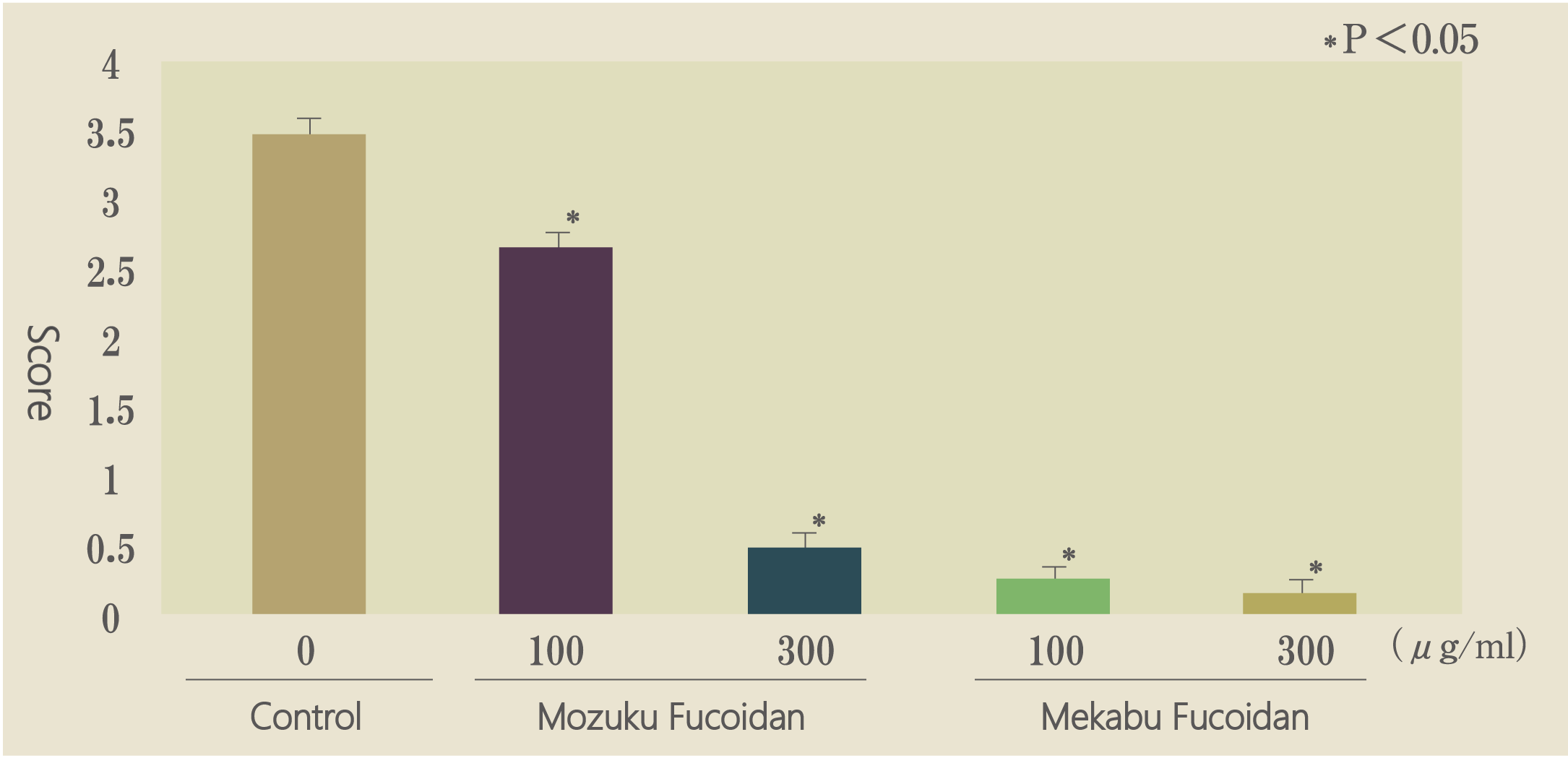
Angiogenesis-inhibiting action
(8th ANNUAL MEETING OF THE SOCIETY FOR NATURAL IMMUNITY)
Effects of Various Types of Fucoidan on Angiogenesis Inhibition
Both mozuku-derived fucoidan and mekabu-derived fucoidan inhibited angiogenesis to different degrees according to their concentration. Also, the angiogenesis-inhibiting effect of mekabu-derived fucoidan was greater than that of mozuku-derived fucoidan.
We are conducting research on fucoidan, whose various physiological functions have been elucidated, including 'anti-tumor,' 'cholesterol-lowering,' 'blood pressure-lowering,' and 'anti-virus' effects.